
Yoga For Runners: A Beginner's Guide

Running is a beautiful, freeing sport—but let’s be real, it can also leave us with tight hamstrings, stiff hips, sore knees, and more. Many runners know the importance of stretching but aren’t sure how to make it a regular part of their training. That’s where yoga comes in.
Yoga for runners creates balance in the body, builds strength in overlooked areas, calms the nervous system, and opens up space to breathe. Adding yoga sessions to your week can help you feel better in your body, support your mental health, and even make your runs more enjoyable.
Is Yoga Good for Runners?

Yes, yoga is absolutely good for runners! Running repeats the same motion mile after mile. It strengthens some muscles while leaving others neglected, which can lead to pain or injury. Yoga helps restore balance.
Here’s why many runners add yoga to their routine:
Flexibility and mobility: Moves your legs, hips, and lower body through a full range of motion, not just forward and back.
Stronger support muscles: Builds strength in stabilizing areas like the glutes and core that protect your joints and keep your form solid.
Better form awareness: Improves posture and body awareness, so you run more efficiently.
Faster recovery: Encourages blood flow that speeds up healing on recovery days.
The goal isn’t to become the most flexible person in the studio. The goal is to build a body that can handle the demands of running for years to come.
Mental Health Benefits of Yoga For Runners
Running does wonders for mental health, and yoga adds another layer of support. Stepping onto a mat and slowing down allows your focus to shift inward and your breath to guide your movement. This calming effect goes deeper than just “feeling good”—it’s backed by science.
Research shows that yoga:
Calms the nervous system: Activates the body’s “rest and digest” mode to reduce stress and anxiety.
Sharpens focus: Teaches concentration that carries over into running and everyday life.
Releases tension: Loosens tight hips, shoulders, and back while easing emotional strain.
Builds self-compassion: Reminds us that rest and recovery are essential, not optional.
Think of yoga as a moving meditation. Running clears the mind with forward motion, while yoga steadies it with stillness and breath. Together, they create a powerful combination for mental health.
Physical Benefits of Incorporating Yoga Sessions Into Your Training Plans
Yoga is relaxing, but it also directly supports your running performance and longevity. Adding a couple of sessions a week can:
Relieve tight muscles in the hamstrings, calves, quads, and hip flexors.
Improve mobility in the joints for a smoother stride.
Strengthen the core, which stabilizes the spine and improves posture.
Enhance balance and ankle stability to prevent falls and overuse injuries.
Support recovery with better circulation and reduced inflammation.
Yoga helps you run with less pain, more freedom of motion, and greater resilience.
Best Yoga Poses For Runners
You don’t need fancy names or long holds to get started. These beginner-friendly poses focus on the areas runners need most.
Stretching Poses

Stretching poses are a runner’s best friend. After miles on the road or trail, your hamstrings, calves, and hips can feel tight and heavy. These poses give your lower body a chance to open up and release that built-up tension. They’re especially useful for recovery days, helping you feel looser, lighter, and ready for your next run.
Downward Dog: Stretches hamstrings, calves, and shoulders. Keep heels reaching toward the floor.
Low Lunge: Opens hip flexors. Step your right foot forward, keep your right knee stacked above your ankle, and let hips sink.
Seated Forward Fold: Lengthens hamstrings and lower back. Sit tall, extend your legs, and reach for your feet.
Figure Four Stretch: Targets hips and glutes. On your back, cross your right ankle over your left thigh and gently pull the left leg toward your chest.
Ankle Stretch: A simple but effective pose for loosening up the ankles and calves. Sit back on your heels with your toes tucked under and gently lean your weight back until you feel a stretch across the bottoms of your feet and into your ankles.
Strengthening Poses

While running builds cardiovascular endurance, it doesn’t always hit every muscle group evenly. Strengthening poses target areas like the glutes, core, and stabilizing muscles that keep your stride efficient and your joints protected. Adding these to your yoga sessions helps you build strength where it matters most and prevents common overuse injuries.
Chair Pose: Engages quads, glutes, and core.
Bridge Pose: Strengthens glutes and hamstrings while stretching hip flexors.
Plank Pose: Fires up core, shoulders, and arms.
Balancing Poses
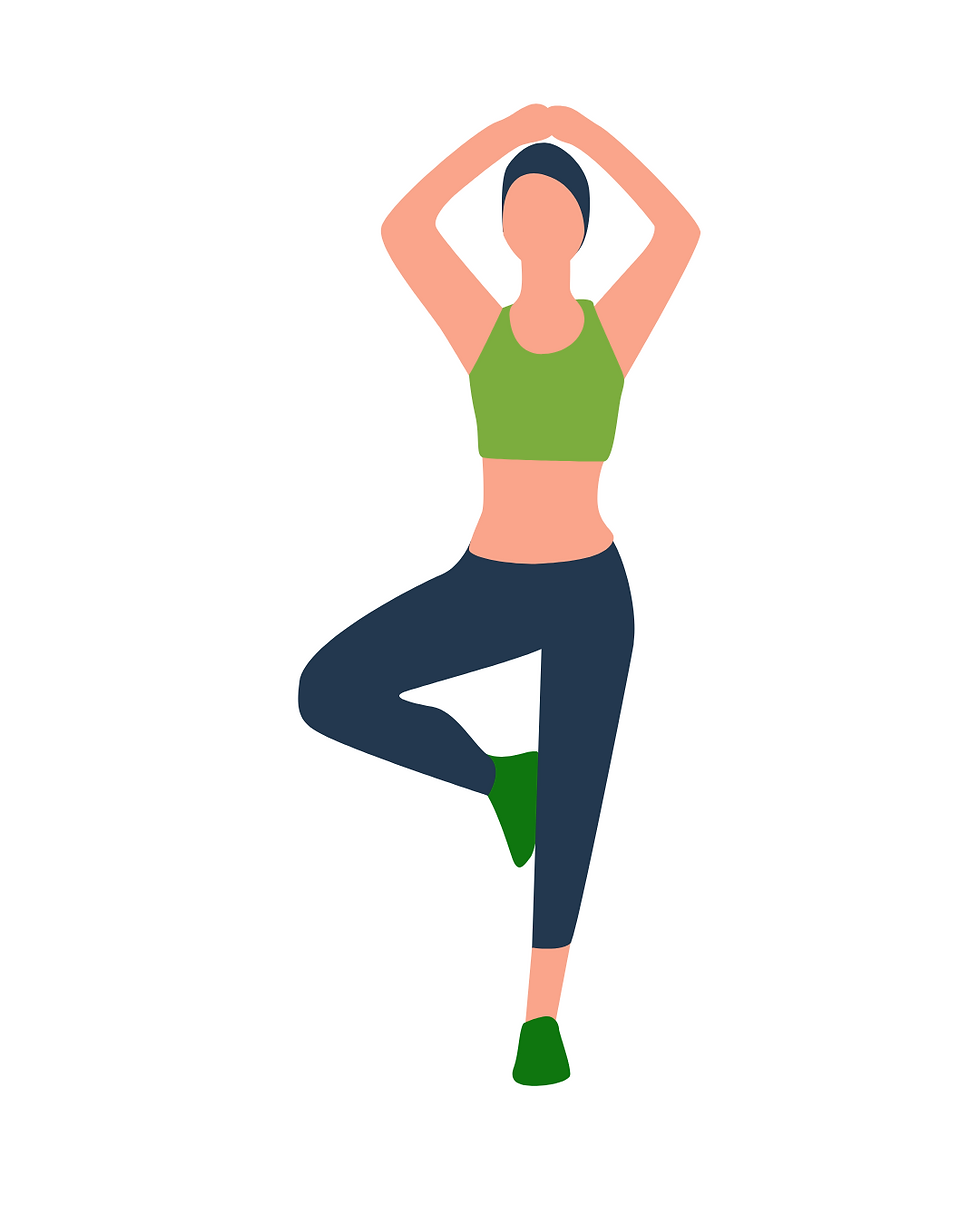
Running mostly happens in a straight line, which means many runners miss out on developing lateral stability. Balancing poses improve coordination, ankle strength, and focus, all of which pay off on uneven surfaces or during longer runs when fatigue sets in. These poses also build mental concentration, which helps you stay present in both yoga and running.
Tree Pose: Stand tall with your right foot pressed into your left thigh or calf, hands at heart center.
Warrior III: Hinge forward, extend your right leg back, and reach your arms forward.
Half-moon Pose: Connect the same side foot and hand to the ground with the top hand reaching for the sky and the floated leg extending back with the foot flexed.
Resting Poses

Every workout needs recovery, and resting poses are where your body and mind soak in the benefits of your practice. These poses are gentle, restorative, and deeply relaxing. They encourage your muscles to let go of tension and give your nervous system a chance to shift into rest mode, leaving you refreshed and grounded.
Child’s Pose: Relaxes back, hips, and shoulders.
Reclined Butterfly: Lying on your back, bring the soles of your feet together and let your knees fall open. Support thighs with a yoga block if needed.
Savasana: Lie flat, arms by your side, and focus on steady breaths.
How Often Should a Runner Do Yoga?
Even a small commitment goes a long way.
Two to three sessions per week provide the best balance of strength, stretching, and relaxation.
Post-run flows of 10–15 minutes help muscles recover.
On recovery days, a gentle session keeps the body moving without stressing tired legs.
Consistency matters more than intensity. Think of yoga like running: steady practice brings the best results.
Best Beginner Yoga Videos for Runners
If you’re looking for a place to start, we can’t recommend Yoga with Adriene on YouTube enough. Adriene has a warm, down-to-earth teaching style that makes yoga feel approachable, even if you’ve never rolled out a mat before.
Her “Yoga for Runners” videos are short, easy to follow, and designed with tight hips, hamstrings, and tired legs in mind. She has sessions for post-run recovery, hip openers, and even quick 10-minute flows that fit perfectly into a busy schedule.
What sets Adriene apart is her ability to blend movement with mindfulness—reminding you to connect to your breath, check in with your body, and offer yourself compassion. It’s the same kind of encouragement many runners crave, especially on hard training days or during recovery.
Helpful Tips for Getting Started
Beginning a yoga practice as a runner doesn’t have to feel intimidating. Just like running, it’s about showing up and taking it one step—or one pose—at a time. Here are some things to keep in mind as you get started.
First, focus on proper form rather than how deep you can go into a stretch. The point of yoga isn’t to push yourself into extreme flexibility, but to find a position that feels good and sustainable for your body. If a pose feels uncomfortable, adjust it so it’s more suitable for your current level. Over time, your body will naturally become more open and mobile.
Remember that yoga is a workout, but not in the same way as speed training or hill repeats. The benefits come from consistency, patience, and listening to your body. Every session is beneficial, even if it’s only ten minutes of gentle stretching after a run. Think of yoga as a way to restore energy instead of draining it.
Most importantly, try not to overdo it at the start. You don't need to push past pain or strain; rather, work on building strength and mobility gradually. At some point, you’ll notice your body responding with better balance, smoother motion, and less tightness after runs. That’s when you’ll see just how powerful yoga can be for your running journey.
Incorporate Yoga Into Your Running Routine And Watch Your Performance Soar
Yoga and running don’t compete—they complement each other. Yoga restores what running tightens, strengthens what running neglects, and calms what running excites. Together, they create a well-rounded training plan that supports both physical and mental health.
Running clears the mind and moves you forward. Yoga grounds you and helps you rest. Combined, they make you a stronger, healthier, and more balanced runner, inside and out.
So roll out your mat, take a few breaths, and see how yoga can help your running routine take off.
