
Running Toward Connection: Ty Curtis’ Journey to the Bayshore Marathon

For most of his life, Ty Curtis never really considered himself “a runner.”
Growing up in Traverse City, Michigan, athletics were always part of his life. He wrestled and played football throughout high school, but running was simply part of training for other sports. It was conditioning. Something you did to become stronger or more prepared for competition elsewhere.
“I never really thought about running as its own thing,” Ty said. “It was just part of the process.”
After high school and college, though, sports and exercise gradually disappeared from his daily life. Once organized athletics were gone, movement was no longer built into his routine the way it had always been before.
That changed after college when Ty and his cousin Ian decided, almost on a whim, to sign up for a triathlon. At first, he wasn’t even sure he could finish. But once he crossed that finish line, something shifted.
“I got bit by the bug,” he said.
From there, one race turned into another. Over time, endurance sports became more than a temporary challenge. Running transformed from a means to an end into a meaningful practice of its own.
Why the Marathon Matters

As Ty continued running, he realized he thrives when he has a major goal on the horizon. For him, races provide structure, discipline, and focus, especially something as demanding as a marathon.
Part of what draws him to the marathon distance is the level of preparation it requires. Training for 26.2 miles impacts every part of life, from sleep and hydration to stress management and mental focus.
“You have to pay attention to your sleep and your hydration,” Ty said. “You have to be physically and mentally prepared. If you don’t follow the plan and do the preparation beforehand, that’s when you crash and burn.”
For Ty, the race itself is partly about seeing what he’s capable of and pushing beyond his previous limits. But over time, he’s also realized that running gives him something much deeper than athletic accomplishment.
Movement as a Foundation for Mental Health
Ty was later in life when he recognized and acknowledged his ADHD diagnosis, but looking back, he can now clearly see how important exercise had always been for his mental well-being.
Some of the most difficult and demanding seasons of his life were also the times when he was moving and training the most consistently.
In high school, he balanced two sports at a high level. During his triathlon years, he was completing a master’s program, working full time, and parenting two young children. Exercise became a grounding force that helped create stability during overwhelming periods of life.
“It created a stable foundation for me,” he said.
That realization carries additional meaning because of Ty’s professional background. As a social worker and therapist, he has spent his career working in mental and behavioral health. He sees firsthand how movement can positively impact emotional well-being.
“A lot of people are looking for medication that will help or fix things,” he said. “And medication absolutely has its place. But regular exercise can have benefits on mental health similar to what medication can do.”
Running became more than fitness. It became a form of care and consistency that helped support him mentally during difficult seasons.
Discovering the Power of Community

Even with all the personal benefits running provided, Ty says the community aspect of the sport is something he didn’t fully appreciate until more recently.
The sports he identified with most growing up, especially wrestling, were highly individual. Even triathlons often felt solitary. Training and racing were mostly internal experiences where the focus stayed on personal performance.
Over the last few years, though, Ty has started to recognize how meaningful connection can be within the running community.
His friend and neighbor, Chris, is currently training for the Bayshore Half Marathon, and the two originally started running together during a particularly difficult season of life. Through those runs, Ty found a different kind of support system built around consistency, conversation, and simply showing up for one another.
“That community piece is something I didn’t fully appreciate before,” he said. “Now it’s one of the things I value most.”
One of the things he continues to love most about the running community is how welcoming it feels regardless of pace, experience, or ability.
“I’ve never been to any kind of race or run club where people weren’t genuinely excited to see you there,” he said. “It doesn’t matter if you just finished an ultra or if you haven’t run more than 10 minutes in your life. People are supportive and excited to have you there.”
Finding Still I Run
A few years ago, Ty started looking for a way to connect his running to something larger than personal goals or race times. Because of both his personal experiences and professional background in mental health, Still I Run immediately resonated with him.
He first connected through Runstreak for Mental Health Awareness and stayed engaged through social media and newsletters afterward. When he later saw the opportunity to run the Bayshore Marathon with Team Still I Run, the decision felt meaningful on multiple levels.
This year will be his first time running Bayshore, making the experience even more personal because it’s happening in his hometown.
“I’m really excited to be here and running in my hometown while supporting a cause I care about,” he said. “Having it be a hometown race makes it that much more meaningful.”
The Courage to Ask for Support
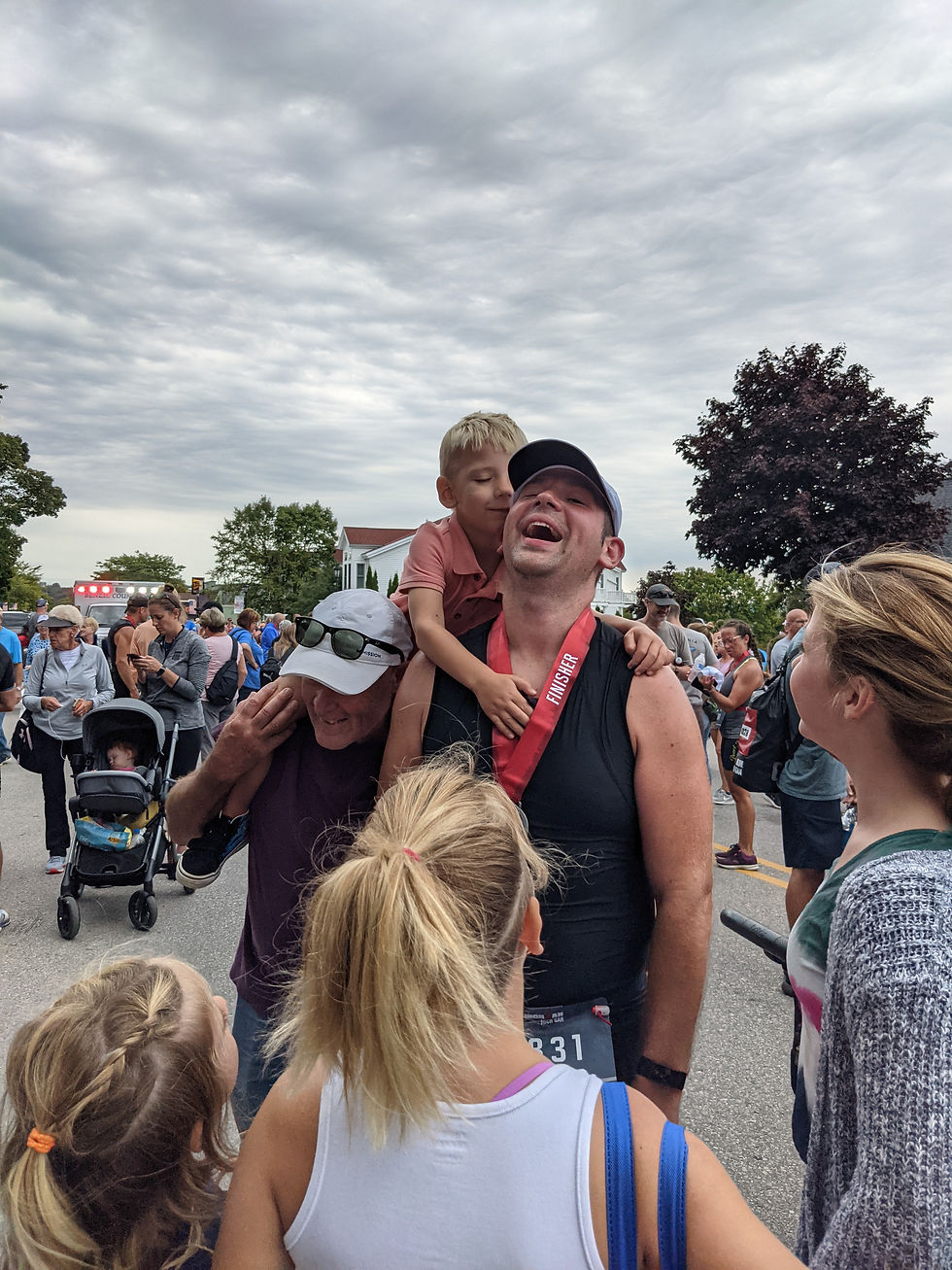
Like many runners participating with Team Still I Run, fundraising initially felt uncomfortable for Ty.
“It was hard for me to ask people for money or support,” he said.
But once he finally shared his fundraiser publicly, the response surprised him. Within just two or three days, he had already reached his fundraising goal.
“The support was amazing,” he said.
The experience reminded him how deeply mental health impacts so many people, even when those conversations are not always visible on the surface.
Being able to line up on race day alongside people who supported both him and the broader mission of mental health awareness has made the experience feel even more meaningful.
Running for Something Bigger
Mental health awareness has become especially personal for Ty in recent months.
Over the years, he has lost former coworkers and peers to suicide. Then, after signing up for Bayshore, his family experienced another devastating loss when his cousin Tayler died by suicide.
“It was absolutely shocking for our family,” he said.
The grief has been difficult to process, but Ty says there is still hope in knowing he can use this experience to help raise awareness and continue conversations around mental health.
“It’s a sad thing,” he said, “but there’s also hope in being able to do what little I can to raise awareness.”
As Ty prepares to run through the streets of his hometown at Bayshore, his story reflects so much of what Team Still I Run represents. Running becomes more than a finish time or a training plan. It becomes a source of grounding, connection, healing, and support.
For Ty, every mile at Bayshore will carry all of those things forward.
