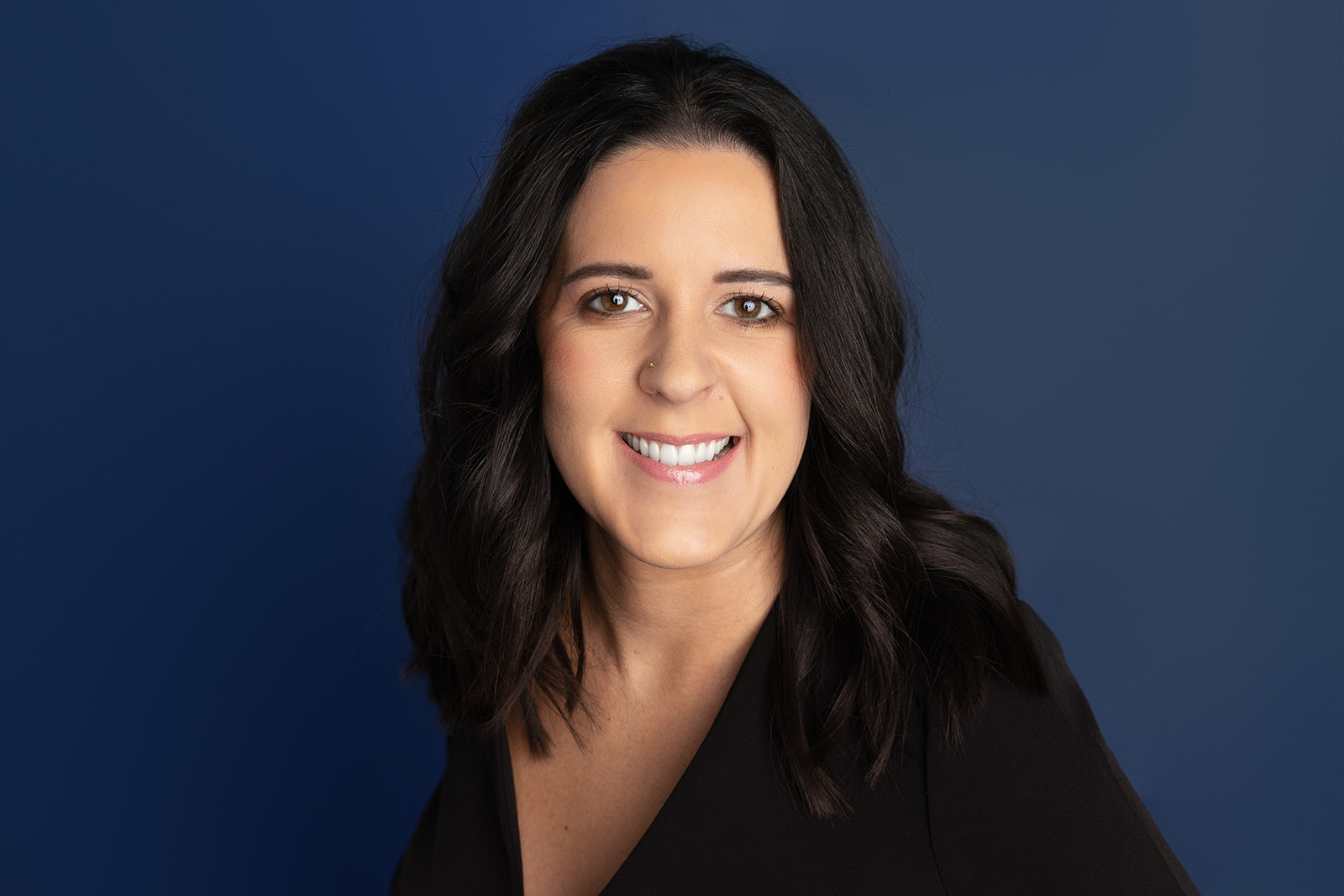
“I Felt Like Me Again”: How Running Helped Conoshia Odum Find Her Way Back to Herself
- Amber Kraus

- 2 days ago
- 6 min read
For most of her life, Conoshia Odum never thought of herself as a runner.
Running wasn’t something she grew up doing. It wasn’t a sport she had always loved or a goal she had been working toward. In fact, when running first entered her life in a meaningful way, she wasn’t looking for it at all.
She was simply trying to feel like herself again.
Today, Conoshia is a mom of four, a graduate student studying public health with an emphasis in mental health and well-being, a marathoner, and a member of Team Still I Run preparing to run the 2026 New York City Marathon.
But the road that brought her here started long before she ever laced up a pair of running shoes.
Growing Up Where Mental Health Wasn’t Talked About
Conoshia grew up in Memphis in a Black family where conversations about mental health were rare.
Growing up, Conoshia witnessed the impact of substance use within her family and community, though at the time, she didn’t understand those struggles through the lens of mental health. As a child, she often viewed what she was seeing as personal choices rather than recognizing the deeper challenges that can contribute to addiction.
“I didn’t look at it as a mental illness growing up,” she said.
Mental health simply wasn’t something people around her discussed openly. There was stigma attached to it, and admitting you were struggling could quickly lead to gossip or being labeled “crazy.”
Looking back now, Conoshia can recognize people throughout her childhood and community who were likely struggling with their mental health without having the language, resources, or support to talk about what they were experiencing.
Her perspective began to change as she entered the public health field. Today, she is pursuing her master’s degree in public health with an emphasis in mental health and well-being. Through her studies, she has learned more about social determinants of health, disparities in access to care, and the many ways mental health can shape people’s lives.
That education has also changed how she understands her own story.
“You can be the smartest person in the world and still go through mental health struggles,” she said. “And you still might not know what’s going on with you unless you’re exposed to these things.”
When “Mom Mode” Became Something More

Conoshia became a mom for the first time at 20 years old. Nearly two decades later, at 39, she learned she was expecting her fourth child.
The pregnancy came as a shock.
At the time, she was in the best physical shape of her life. Suddenly, she was preparing to start over with a baby again.
Still, this was her fourth child. Part of her felt like she should know what she was doing by now.
But as any parent knows, experience doesn’t mean you have everything figured out. After her daughter was born, Conoshia immediately slipped into what she calls “Mom Mode.”
She took care of everyone else. She kept moving. She pushed through. And slowly, she stopped taking care of herself.
She began crying over little things. She was exhausted. She felt emotions and physical symptoms she hadn’t experienced after her other pregnancies. Something was different, but she didn’t immediately recognize what was happening.
Her daughter was nearly two and a half before Conoshia fully realized that what she was experiencing went deeper than the “baby blues.”
She was depressed.
Even with her growing knowledge of mental health, recognizing it in herself took time.
“I didn’t even realize I was depressed,” she said. “I thought it was just normal. But it wasn’t normal. It was depression.”
The Walk That Changed Everything

One day, Conoshia went outside for a walk.
There wasn’t a training plan or a goal behind it. Living in Colorado, walking and getting outside felt like a natural thing to do.
Then the walk became a light jog.
The jog became a run.
“When I talk about running, it’s so deep, because I’ve never been a runner,” Conoshia said. “I never looked at it like this would become my life. But my body naturally said, ‘This is what you need.’”
She kept going.
“I really can’t explain it,” she said. “I just went for a walk and then I started jogging, and all of a sudden I just started going faster. My body just naturally adapted to the run.”
By the time she got home, Conoshia realized she had run about three miles.
She wasn’t completely exhausted. She wasn’t struggling to catch her breath.
She felt good.
Then she looked in the mirror.
For the first time in a long time, she recognized the person looking back at her.
“I felt like me again.”
She remembers feeling joyful that day. She had energy she hadn’t felt in months. She didn’t need the nap she had grown accustomed to taking.
So the next day, she went out again.
This time, she ran five miles.
Then she bought running shoes.
And just like that, a person who had never considered herself a runner started researching shoes, fueling, training, and everything else she could learn about her new sport.
“Now I’m a runner,” she said. “I’m somebody that runs. And I’m excited about it.”
Running Became Part of Caring for Herself
Running didn’t erase every difficult feeling or make life suddenly easy. What it gave Conoshia was a way to care for herself when she had spent so much time caring for everyone else.
She noticed the difference not only in how she felt, but in how she showed up for her family.
When she runs, she says she is less irritable. She feels better mentally and physically. She has more capacity to be the mother and person she wants to be.
Her experience has also shaped the work she wants to do in public health.
Conoshia is currently involved in research focused on the Black community and the disparities surrounding cardiovascular and cognitive health. She is especially interested in the role physical activity can play in supporting mental, cardiovascular, and cognitive well-being.
It brings her personal story and professional interests together in a way she never expected.
She also wants other mothers to hear something she wishes more people understood: mental health struggles can happen to anyone.
Conoshia never thought depression would happen to her. Now she knows that knowledge, education, and access to resources can make an enormous difference in helping people recognize when they need support.
For her, running became one piece of that support.
Finding Still I Run
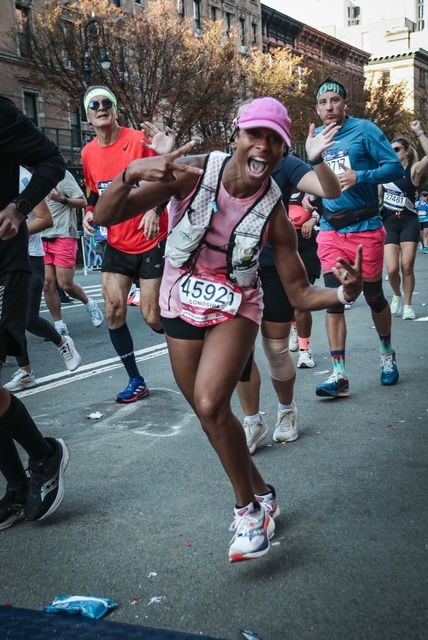
By 2025, Conoshia’s unexpected journey into running had taken her all the way to the New York City Marathon.
It was her first marathon, and she loved the experience so much that she entered the lottery hoping to return in 2026.
She didn’t get in.
Then she learned about another path to the starting line: running for charity.
Conoshia knew immediately that if she was going to raise money for an organization, she needed to believe deeply in its mission. She wasn’t interested in choosing a charity simply because it had a marathon bib available.
Then she found Still I Run.
As she read about the organization and its mission to promote running for mental well-being, something clicked.
She had already lived that mission.
Long before she knew Still I Run existed, running had become part of her own mental health journey. It had helped her reconnect with herself during one of the hardest seasons of her life.
Still I Run was the only charity she applied to run with.
To Conoshia, finding the organization felt like more than coincidence. Her faith is an important part of her life, and she describes the connection as a “divine alignment.”
There was another connection, too.
When she first saw the name Still I Run, she immediately thought of Maya Angelou’s “Still I Rise,” a poem she remembers learning about in elementary school. When she later discovered that “Still I Rise” helped inspire Still I Run founder Sasha Wolff when naming the organization, the connection felt even more meaningful.
Running for Something Bigger in New York City
Just three weeks into her Team Still I Run fundraising campaign, Conoshia had already raised half of her goal.
She credits much of that early success to how personally connected she feels to the cause.
She isn’t trying to convince people to support something abstract. She can talk about Still I Run’s mission through her own lived experience because she knows what movement has meant for her mental health.
In a way, she was living the Still I Run mission before she ever knew its name.
This November, Conoshia will return to the New York City Marathon, but the experience will be different from her first time on the course.
This time, she’ll have a team beside her.
She’s especially excited about the community and team bonding that come with being part of Team Still I Run, something she didn’t have during her first NYC Marathon.
And when she reaches the starting line, she’ll be carrying a story much bigger than the 26.2 miles ahead.
It’s the story of a woman who grew up in a community where mental health was rarely discussed, became a public health advocate helping change those conversations, experienced depression herself, and unexpectedly found part of her way forward through running.
It started with one walk.
Then a jog.
Then three miles.
Then five.
And somewhere along the way, Conoshia looked in the mirror and saw herself again.
“Now I’m a runner. I’m somebody that runs.”
For Conoshia, those words mean far more than miles or marathon finish lines.
They’re a reminder of how far she has come, and why she keeps running forward.